
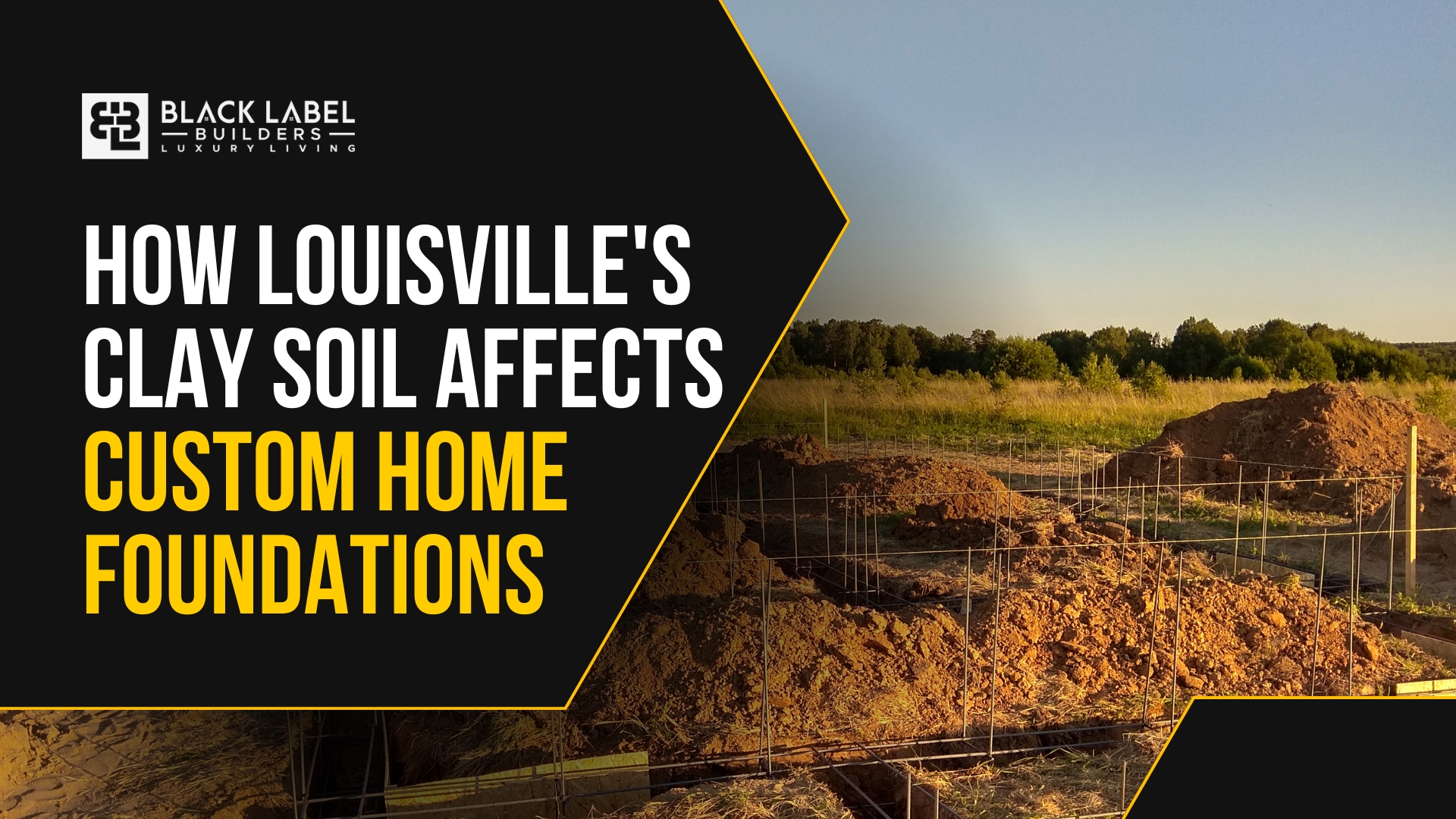
How Louisville's Clay Soil Affects Custom Home Foundations
July 27, 2026 | Black Label Builders
You must have finally made up your mind to build a custom home in Louisville. And you've probably heard that clay soil there can cause foundation problems. There is some truth to it. But clay soil does not mean your project will fail. You need to plan carefully, engineer properly, and follow sound construction methods. It helps build homes safely that can stay in good condition for years to come.
The key is to know how clay soil behaves and design the foundation to handle the conditions from the beginning.
Check out the Signs You’re Ready to Build a Custom Home.
What Does Clay Soil Actually Mean?
Clay soil is made up of tiny particles. These can hold water much more easily than sandy or gravelly soils. Some types of clay are known as expansive clay. They can change size depending on how much moisture they contain.
In wet weather, clay can absorb water and expand. However, when there are dry periods, it loses moisture and shrinks.
These regular changes can cause the ground below a home to move over time. That's why builders pay close attention to the soil conditions before construction starts.
Here is a Step-by-Step Process of Building a Custom Home in Louisville (Timeline Included).
How Clay Soil Can Affect Your Foundation
A foundation can provide the needed support to your home evenly. When the soil under it expands or shrinks, it can create uneven pressure on the foundation.
Over time, the movement can lead to foundation cracks, uneven floors, cracks in the drywall or ceilings, exterior bricks, masonry cracks, and gaps between the windows and door frames.
Not every crack is due to clay soil, but these are common signs that foundation movement may be happening.
Why Moisture Makes Such A Difference?
The biggest challenge with clay soil is not the soil, but changes in moisture levels. Mostly, heavy rainfall, leaking plumbing, poor drainage, or overwatering landscaping can cause soil to swell. When the weather is hot, the same soil can shrink when it loses moisture.
These continuous expansion and contraction cycles even put stress on the foundation over time. That's why proper drainage and moisture management are as important as the foundation design itself.
Know How Weather Affects Home Construction Timelines in Louisville.
How Do Builders Prepare For Clay Soil?
They Do Soil Testing
A geotechnical soil test helps find the type of soil on your lot and how it will behave under different moisture conditions. The results can guide the foundation design and construction plan.
Proper Site Grading
The ground around your home should slope away from the foundation. It helps direct rainwater away instead of allowing it to collect next to the structure.
Learn about Land Prep in Louisville: Soil Tests, Utilities & Site Work Explained.
Engineered Foundation Design
Every building site is different. It depends on the soil conditions and local requirements. However, most engineers even suggest foundation systems that do well in expansive soils.
Effective Drainage
A well-designed drainage system, including downspouts, gutters, and proper site drainage, helps prevent excess moisture from collecting around the foundation.
Quality Construction Practices
Proper excavation, soil preparation, and concrete placement can all contribute to a stronger, longer-lasting foundation.
Here is How to Choose the Right Lot in Louisville for Your Custom Home.
What Should Homeowners Consider After Construction?
Even if you have a well-built home, it can benefit from ongoing maintenance. If you want to protect your foundation, you need to keep gutters clean so that the water can flow away from your home.
- You need to keep gutters clean so water can flow away from your home.
- Extend downspouts various feet away from the foundation.
- Don't overwater flower beds or landscaping next to the house.
- Repair plumbing leaks quickly.
- Maintain continuous moisture levels around the foundation during the extended dry periods if these are recommended for your area.
- Look for new cracks or changes that can include foundation movement.
Check out Home Maintenance Tips to Keep Your Luxury Home in Perfect Condition.
Can You Build A Home On Clay Soil?
Yes. Most homes are built on clay soil every year without experiencing foundation issues. The difference depends on proper planning.
Builders who know the local soil conditions work with engineers to design foundations. These can suit the site. It helps reduce the risk of future movement. The goal is to build with the use of clay and not avoid its use.
We Build On A Strong Foundation From Day One.
Clay soil can affect a home's foundation. However, it does not have to be a problem. When you do a proper soil evaluation, address drainage issues, and build with quality construction, you can build a home designed to perform well for years.
At Black Label Builders, we believe that every successful custom home starts below the surface. You need to check the site conditions carefully and follow the proven construction practices. It helps create homes that are built for long-term durability and stability. Whether you are building on clay soil or other challenging sites, our team can help with the craftsmanship you can trust.