
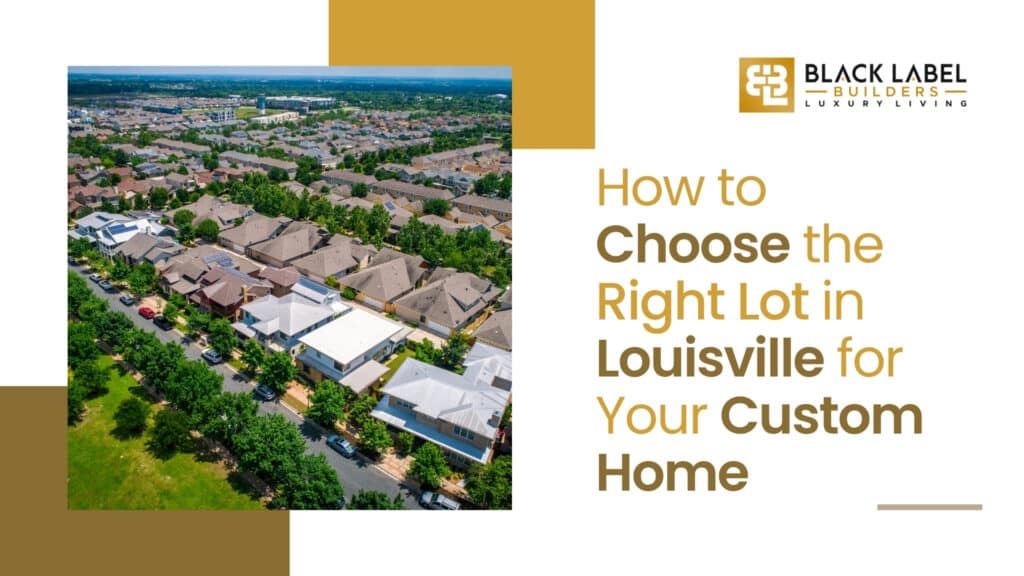
How to Choose the Right Lot in Louisville for Your Custom Home
- Andy Simmons
People often overlook one crucial element when envisioning their ideal home: the perfect lot. Selecting the most suitable design features and the top design/build company is equally as crucial as selecting the right lot for your own house.
A carefully chosen lot can lay the groundwork for your house’s future and offer the perfect setting for a lifetime of joyful memories.
Factors To Consider Before Choosing A Lot in Louisville for Your Custom Home
We have outlined the key considerations for selecting the ideal lot for your Louisville home development, ensuring your custom home is positioned for success and benefits future generations.
1. Location
The lot you purchase should ideally be on a street that makes sense for you and your family, accessible to the closest facilities, such as stores, schools, hospitals, parks, and public transportation. It goes without saying that the real estate maxim “Location, Location, Location” is one of the most crucial factors to take into account before purchasing land. This catchphrase, which was initially used in the middle of the 20th century, is still as applicable today.
Furthermore, you should confirm any forest fire, tornado, or earthquake hazards with your local municipal or national office, even though your construction developer has probably already done some study on your property. These risks may affect the cost of your insurance and your project’s ability to secure funding.
2. Shape, Size, and Aspect
The size of your lot in relation to your unique situation should be your first consideration. To add extra bedrooms and other features, for example, a family will require a larger lot, whereas a single owner or a couple could require less land. As a result, the size of your chosen lot greatly influences the style of your home.
It should go without saying that the house you intend to build must fit on your block. Most people choose a rectangular, level block that faces the street. In suburban locations, these blocks will therefore frequently command a premium price.
Additionally, it’s important to keep in mind that more “unique or unusual” pieces of land, like corner lots or L-shaped lots, might be harder to sell when the time comes. There may be limitations on the kind of construction that can be built on these uneven lands. These uneven lots do offer certain advantages, though. For example, the corner lot permits the possibility of a subdivision, whereas the battle-axe lot is typically less expensive.
3. Research Your Future HOA
The future homeowners’ association is another factor to consider when selecting a lot for your custom house. An HOA is a body that regulates a certain area or community and all of the homes that are part of it. These guidelines can include architectural guidelines, landscape necessities, and community amenities.
It’s important to comprehend the HOA’s regulations and dues because they may have an impact on your home’s cost and design. If you find a lot you like, speak with the existing homeowners’ association to find out exactly what is expected of new homeowners in the neighborhood. Include any prospective monthly HOA dues, mortgage charges, and other monthly obligations in your budget for your custom house design.
4. Slopes
It can be hard to resist a sloping property with a breathtaking view. It should be noted, however, that a sloping lot necessitates much more planning before construction can begin. If you’ve always wanted a sloping lot, it’s important to consult a skilled builder, like Black Label Builders, before making the purchase. To make room for the level slab, your contractor will probably need to make some incisions in the slope. Furthermore, retaining walls could be required to ensure stable soil that complies with regional regulations.
You should be mindful of the cost because this preparation can be really expensive. Likewise, you will need to talk to your developer about drainage concerns if your lot is at the foot of a slope or below street level. Black Label Builders can help you create the perfect plan for your home.
5. Consideration for Long-Term Life Plans
It’s crucial to think about whether the lot you’re looking for will be ideal for you at various stages of your life. Since designing a custom home is a big investment, make sure the lot will fulfill your long-term goals and accommodate your family for many years to come.
Will a particular lot work for more family members, even though you may adore it now? In the future, will you want a recreational room or a home office? Does the outdoor area have adequate room for dogs or possibly an addition? Consider all of these aspects when choosing a lot to make sure it will satisfy your needs now and in the future. Visualize your long-term ambitions and life goals.
6. Sunlight and Orientation
This one is frequently overlooked! Where the sun rises and sets on your house depends on the orientation of your property. In addition to improving indoor spaces and lowering energy expenses, natural light can also improve your attitude. For instance, a lot facing south can offer the best light all day long.
Build Your Louisville Custom Home With Black Label Builders
One of the most essential decisions you will make during the home-building process is selecting a lot. It serves as the basis for your way of life, memories, and future. So, do your homework, take your time, and follow your instincts.
As for the work that comes after choosing the lot, Black Label Builders is there for you. We help Louisville homeowners build a custom home that aligns with their vision and lifestyle. Every project is guided by expertise, integrity, and a deep respect for design harmony with the land.
Connect with Black Label Builders to begin planning a home that fits your future, beautifully and intentionally.
Frequently Asked Questions
Yes, but working with a builder early in the process is strongly recommended. A professional like Black Label Builders can help you evaluate the lot’s slope, soil quality, drainage, and zoning limitations, factors that might affect design options or construction costs later on.
Besides the price tag, there is land testing, utility hookups, grading, permits, and site prep. The cost of these items varies depending on the terrain and location, so it’s always a good idea to include them in your overall construction budget.
Setbacks, the height of buildings, and lot coverage are some of the ways that zoning laws control. How the home sits on the lot, and what your overall design looks like is a footprint that can be influenced by these rules. Your builder will lead you through compliance and allow as much available space to be filled.
Wooded or rural lots can be beautiful but often require extra preparation. Clearing trees, adding driveways, and extending utilities can increase costs and timelines. A builder familiar with local terrain can help plan efficiently while preserving the property’s natural charm.
Louisville offers a mix of suburban convenience, rolling landscapes, and historic neighborhoods, allowing for diverse design opportunities. Homeowners can enjoy larger lots, scenic views, and community character while staying close to the amenities of city life.