
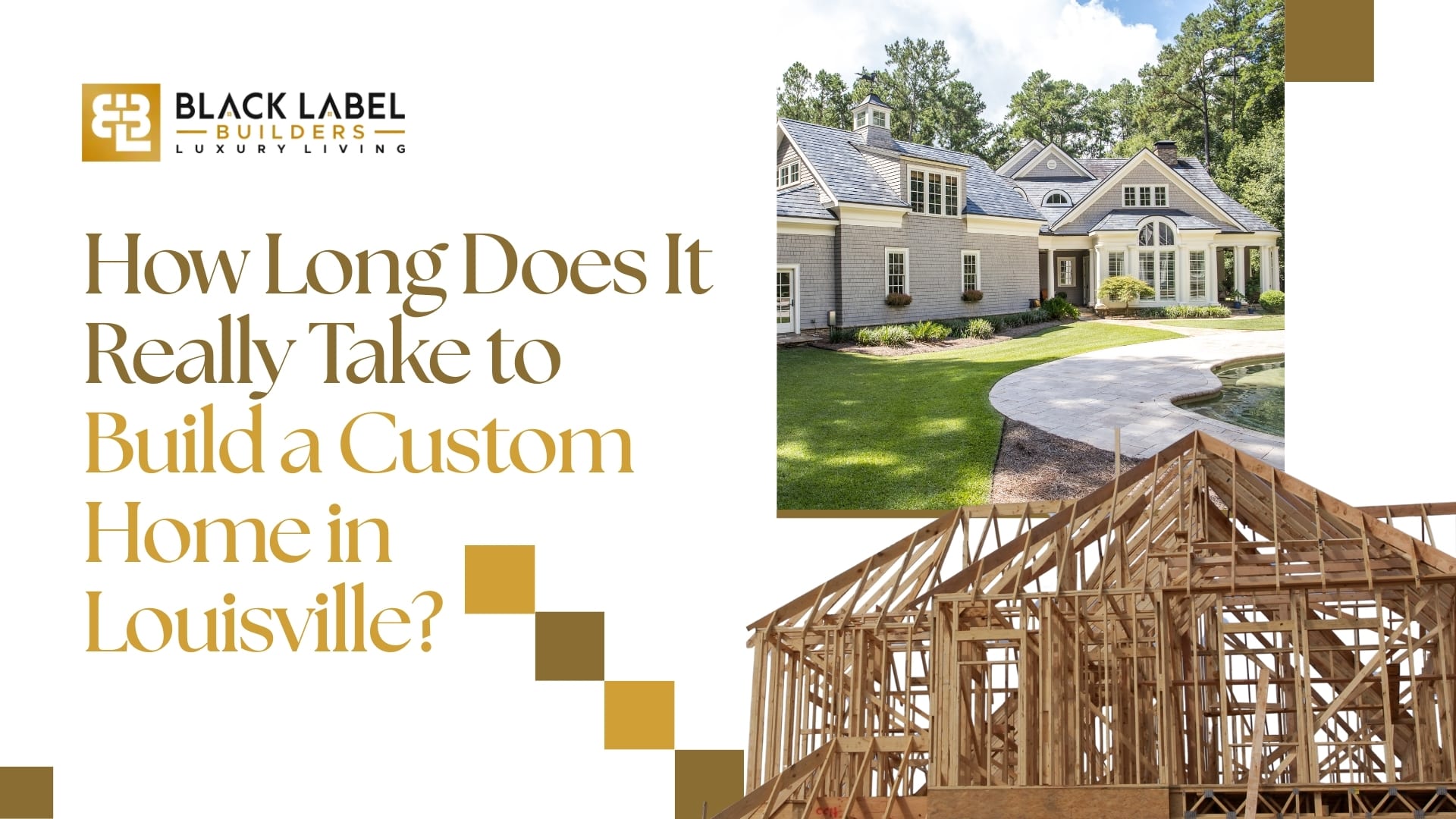
How Long Does It Really Take to Build a Custom Home in Louisville?
- Andy Simmons
The biggest problems in custom homes rarely come from design ideas. They come from unclear processes.
Reliable Louisville builders follow a structured build sequence that resolves major decisions early and prevents mid-construction surprises. This includes discovery, design coordination, budgeting, construction, and post-completion review. When a builder struggles to explain their process clearly, it often signals future cost or timeline issues.
A professional builder should clearly outline:
- How early design decisions affect cost and feasibility
- When selections are finalized versus adjustable
- How changes are documented and approved
Process clarity protects both the homeowner and the builder.
Building a custom home is one of the most exciting investments you can make. But it doesn’t happen overnight. One of the first questions prospective homeowners ask is simple: How long will it take?
The honest answer is that the timeline varies significantly depending on planning, design complexity, approvals, site conditions, and builder process. What follows is a clear, realistic guide to help you understand the key phases and what impacts the calendar from the moment you decide to build to the day you move in.
Phase 1: Planning & Pre-Construction - 4 to 10+ Weeks
Designing Your Vision
Before construction begins, a custom home requires a design. Some homeowners bring a finished set of plans, while others work with architects to develop concepts from scratch. This part of the process is vital and can’t be rushed. So thoughtful design minimizes change orders later.
Black Label Builders often highlights the value of early collaboration between homeowners, designers, and builders. Our approach to structured discovery ensures that plans are clear, functional, and aligned with budget expectations; reducing downstream delays.
Read more about Black Label’s Signature Process.
Permits and Approvals
Once plans are finalized, they must be submitted for permitting. Depending on your neighborhood, especially in areas with historic overlays or specific design guidelines; approval timelines can vary.
Some jurisdictions take just a few weeks, while others require multiple rounds of review. Building without approved permits isn’t an option, so this stage adds time but protects your project’s integrity.
Timing Impact: If your community has additional requirements (HOAs or local design boards), anticipate longer approval windows.
Phase 2: Site Preparation - 1 to 4 Weeks
After permits are secured, the physical work on your lot begins.
This includes clearing vegetation, grading, utility connections, and preparing the foundation. Unexpected site conditions such as ledge rock, drainage concerns, or challenging topography can extend this period.
Louisville’s geography varies from neighborhood to neighborhood, so experienced builders anticipate these conditions rather than react to them. Their local expertise helps maintain progress without compromising quality.
Phase 3: Foundation & Framing - 3 to 8 Weeks
With a prepared site, the foundation is poured and cured, a critical milestone.
Once the foundation meets engineering standards, framing begins. This stage transforms plans into a tangible structure.
Even though weather can’t be controlled, a disciplined builder sequences this work efficiently. Clear communication and coordination with subcontractors make a measurable difference. Tight framing and adherence to schedule here set the tone for the rest of the build.
Phase 4: Systems, Shell, & Rough-In - 4 to 8 Weeks
After framing, mechanical, electrical, plumbing, HVAC, and insulation work move forward quickly.
Because these are invisible systems, homeowners sometimes underestimate their complexity. Every connection, duct, and line must meet code and function seamlessly once the home is occupied.
This phase also includes exterior work like roof installation, windows, and weather barriers. The goal is a “dry” shell so interior finishes can proceed without risk of moisture or delay.
Phase 5: Interior Finishes - 8 to 14 Weeks
This period is often the most visible, and it’s where your design choices come alive.
Walls get painted, floors are installed, cabinets and countertops go in, trim work is completed, tiles are set, fixtures are mounted, and all the apparent details take shape.
Because so many trades are involved in this stage, good sequencing and communication are vital. Builders who have early design, selection clarity and clearly defined allowances reduce delays and budget surprises.
Black Label Builders’ emphasis on early decision milestones directly supports a smoother interior finish period.
Read more about Energy Efficiency & Sustainability Tips for Louisville Homes.
Phase 6: Final Inspections & Move-In - 2 to 4 Weeks
After construction is essentially complete, final inspections ensure safety, compliance, and performance.
Once approved, a final walkthrough with the builder identifies any minor adjustments (often called a punch list). After these are addressed, keys are handed over, and you can move in.
Realistic Total Timeline
Adding these phases together, a typical custom home in Louisville takes 7 to 10+ months from start to finish. More complex designs, longer permitting windows, or changes mid-build can extend this toward the 12-month mark.
Broadly:
- Planning & Pre-Construction: 1–2.5 months
- Site Prep: 1 month
- Foundation & Framing: 1–2 months
- Systems & Shell: 1–2 months
- Interior Finishes: 2–3.5 months
- Final Approvals & Move-In: 0.5–1 month
What Shortens or Lengthens Your Timeline?
There are no identical builds, but certain factors reliably tilt the schedule:
- Design Completeness: Finalized plans before permitting accelerates early stages.
- Permitting Complexity: Historic districts or design boards can add weeks.
- Material Availability: Supply chain delays still impact finishes.
- Weather: Heavy rains or freezes can slow site work and framing.
- Decision Timing: Changes after framing begin often push the schedule out.
Experience counts. Builders who routinely navigate these factors like those featured on Black Label Builders’ Featured Properties portfolio keep projects moving without compromises to quality.
The Bottom Line
No custom home builder can guarantee an exact move-in date on day one. But experienced professionals can give realistic, phase-specific targets based on your home’s scope and site. Understanding the rhythm of construction helps you plan life logistics with confidence rather than guesswork.
If you’re evaluating builders or planning your custom home timeline, clarity on these phases ensures you avoid surprises and stay engaged at the right moments, not reacting to them.